Goblet Squat
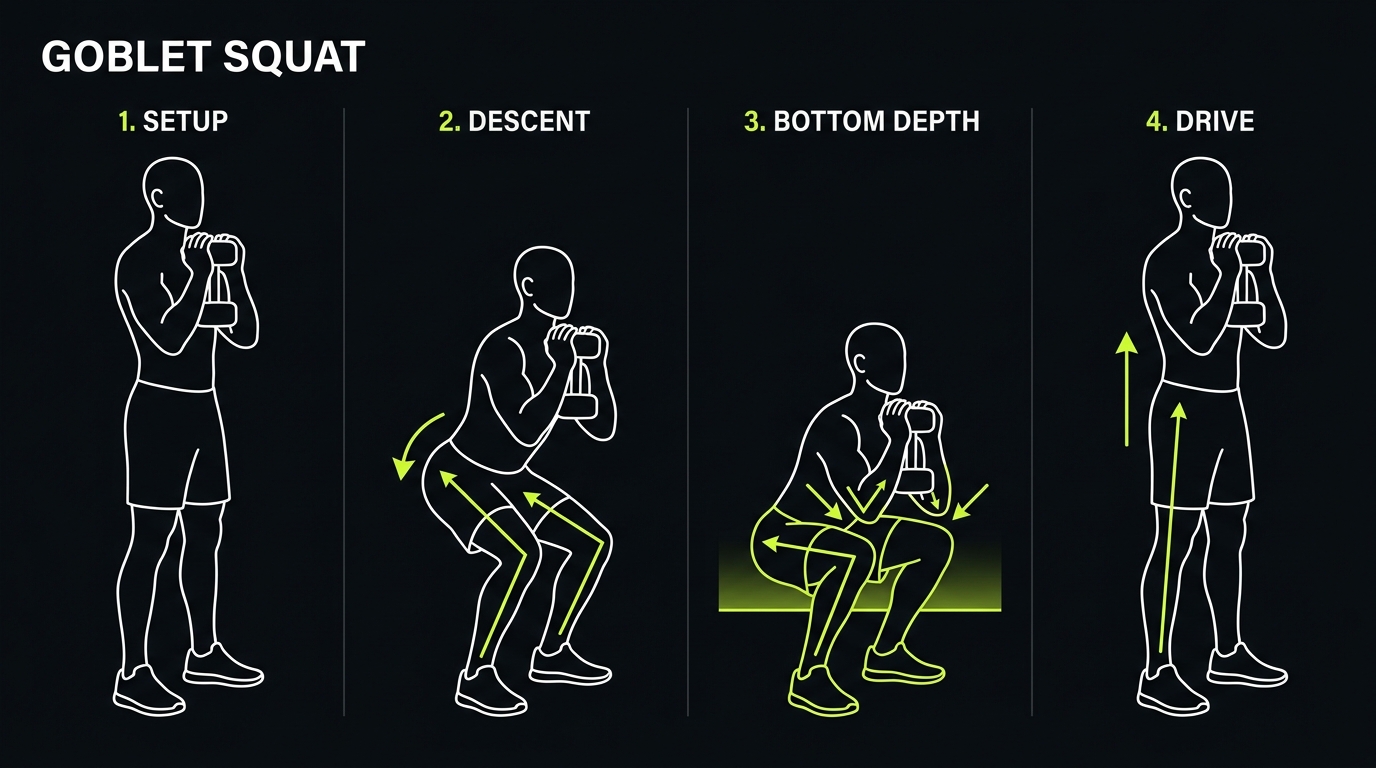
The best first squat for jumping — the goblet squat teaches the correct pattern (upright torso, braced core) as a foundation for barbell squats and jumping. Hold a dumbbell at the chest like a goblet and squat. Also excellent for warm-up activation.
Coaching cues
- 1.Dumbbell pressed against the chest — like holding a cup
- 2.Elbows lightly touch the inside of the knees to ensure depth
- 3.Weight keeps your torso upright
- 4.Master the pattern before moving to the barbell
Detailed training method
Related calculators
Related exercises
Pause Squat
A back-squat variation with a 3-second hold at the bottom — the pause removes bounce and momentum, forcing controlled depth and strength from a dead stop
Barbell Back Squat
The king of strength training and an irreplaceable foundation movement for jump training
Barbell Front Squat
With the bar on the clavicles and front delts and elbows high, squat with a more upright torso
Related articles
How Deep Should You Squat to Jump Higher?
Full, half and quarter squats each have a role in jump training. Here is how to periodize squat depth instead of choosing one forever.
Can Bodyweight Training Improve Your Jump?
Yes for absolute beginners — then it hits a ceiling. Here is where bodyweight work fits and when you must add load.
Does Age Affect Jump Training?
The training priorities change across decades — neural plasticity for youth, recovery management for masters — but it is never too late to start.
Does Jump Training Stunt Growth or Make You Shorter?
No scientific evidence shows strength or plyometric training stunts height. The international consensus says youth training is safe and beneficial.
How to Do a Deload Week (Without Losing Progress)
The three ways to deload, how often, and why performance often peaks the week after a deload — not during the hardest training.
How to Stay Motivated and Consistent Long-Term
Motivation fluctuates even for elite athletes. Identity, process tracking and minimum commitments are what survive the bad weeks.