Barbell Front Squat
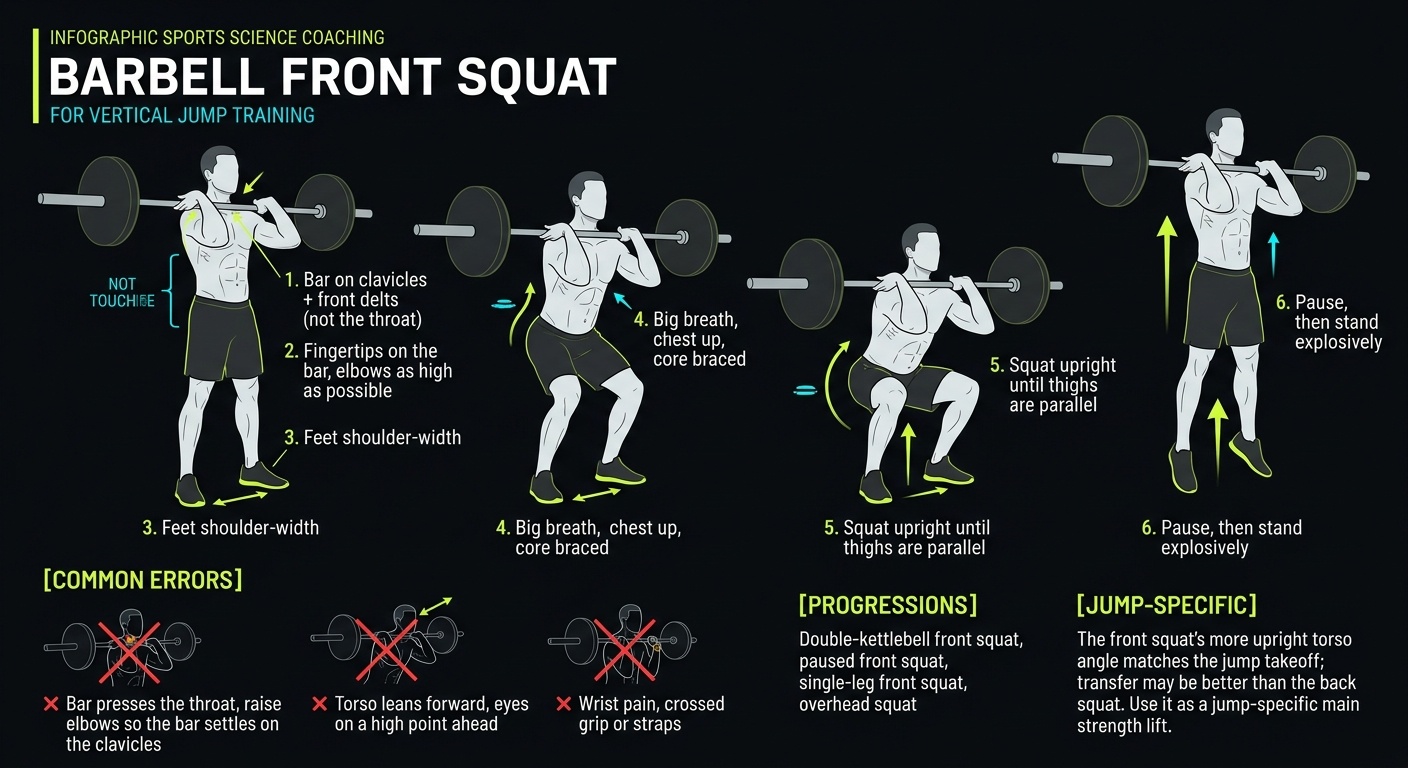
With the bar on the clavicles and front delts and elbows high, squat with a more upright torso. Front squats keep the torso angle closer to the takeoff position with higher demands on quads and core, though evidence that they transfer to jumping better than back squats is mixed. Use a crossed grip or straps if wrist mobility is limited.
Coaching cues
- 1.Bar rests on clavicles + front delts, not the throat
- 2.Elbows as high as possible; fingertips lightly on the bar
- 3.Keep the torso upright — imagine a wall behind your back
- 4.Knees may travel past the toes — that's normal
Detailed training method
Related calculators
Related exercises
Goblet Squat
The best first squat for jumping — the goblet squat teaches the correct pattern (upright torso, braced core) as a foundation for barbell squats and jumping
Pause Squat
A back-squat variation with a 3-second hold at the bottom — the pause removes bounce and momentum, forcing controlled depth and strength from a dead stop
Barbell Back Squat
The king of strength training and an irreplaceable foundation movement for jump training
Related articles
How Deep Should You Squat to Jump Higher?
Full, half and quarter squats each have a role in jump training. Here is how to periodize squat depth instead of choosing one forever.
Should Knees Never Pass the Toes? A Myth Explained
Banning forward knee travel is over-generalized, non-specific and can even increase lumbar shear. Here is what to actually watch.