Single Leg Box Jump
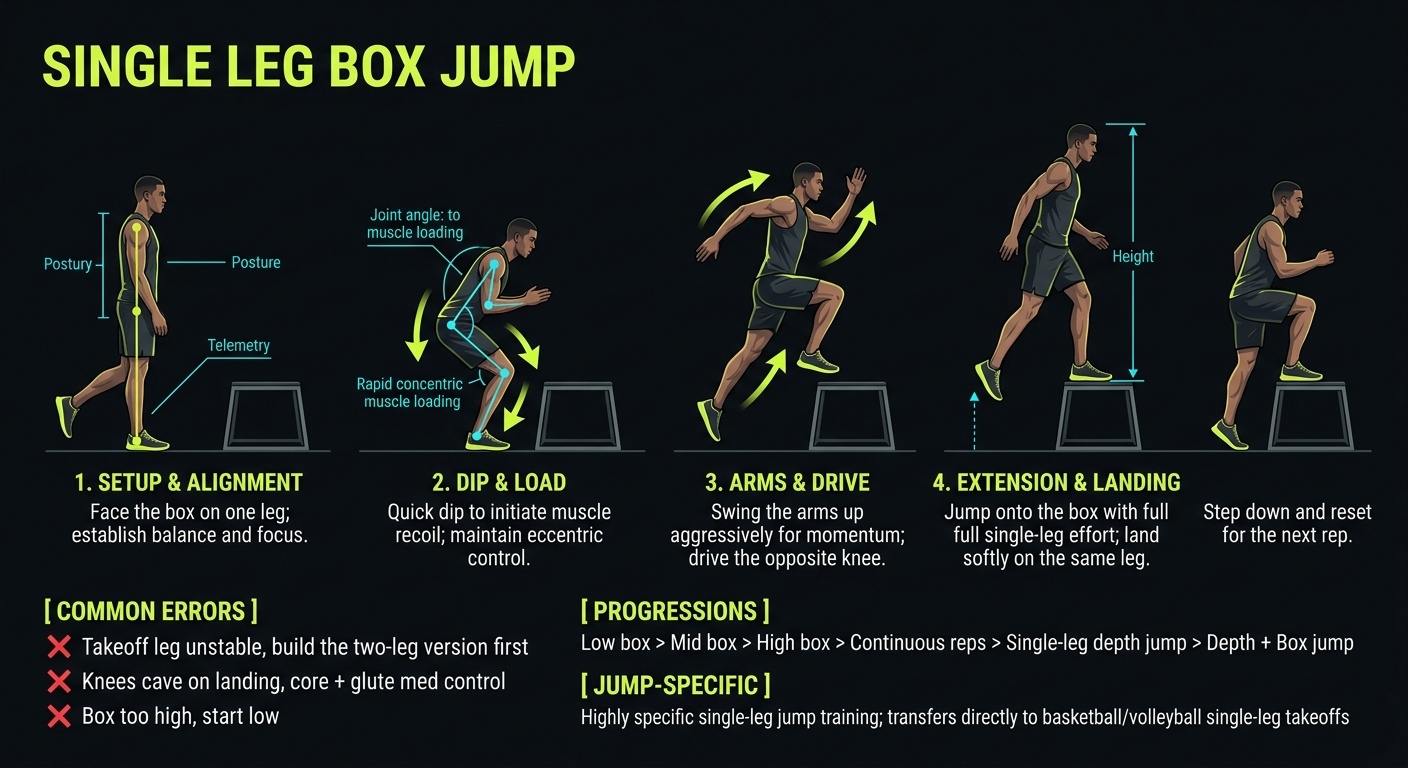
Highly specific single-leg jump training — trains single-leg takeoff, stable box landings and left/right power differences; suits basketball layups, volleyball approach jumps and more.
Coaching cues
- 1.Choose a low box first — controlled landing beats height
- 2.Takeoff knee tracks over toes — no valgus
- 3.Swing the arms up to help leave the ground
- 4.Hold the landing 2s before stepping down
Detailed training method
Prerequisites: two-leg box jumps, single-leg balance, and a 2s single-leg landing hold without wobble; if left/right takeoff power differs >10%, train the weak side first; regress immediately if landings are unstable
Related calculators
Related exercises
Box Jump
The first-choice entry to plyometrics — the box jump teaches fast force production and coordinated landing, a cornerstone of jump training
Depth Drop
The preparatory exercise for depth jumps — the depth drop teaches safe, efficient absorption of landing impact (eccentric strength), laying the safety foundation for explosive rebounds
Single-Leg Landing Control
The safety prerequisite for every single-leg jump — step off a low box or hop forward, land on one leg, and stick the landing for 2 seconds
Related articles
Does Age Affect Jump Training?
The training priorities change across decades — neural plasticity for youth, recovery management for masters — but it is never too late to start.
Single-Leg vs Double-Leg Jumps: Which Should You Train?
Two-leg jumps build symmetric force; one-leg jumps build horizontal-to-vertical conversion. Most athletes need both.
Overcoming the Fear of Jumping After Injury
Kinesiophobia fades through graded exposure, cognitive reframing and success experiences — not through waiting.