Single Leg Bound
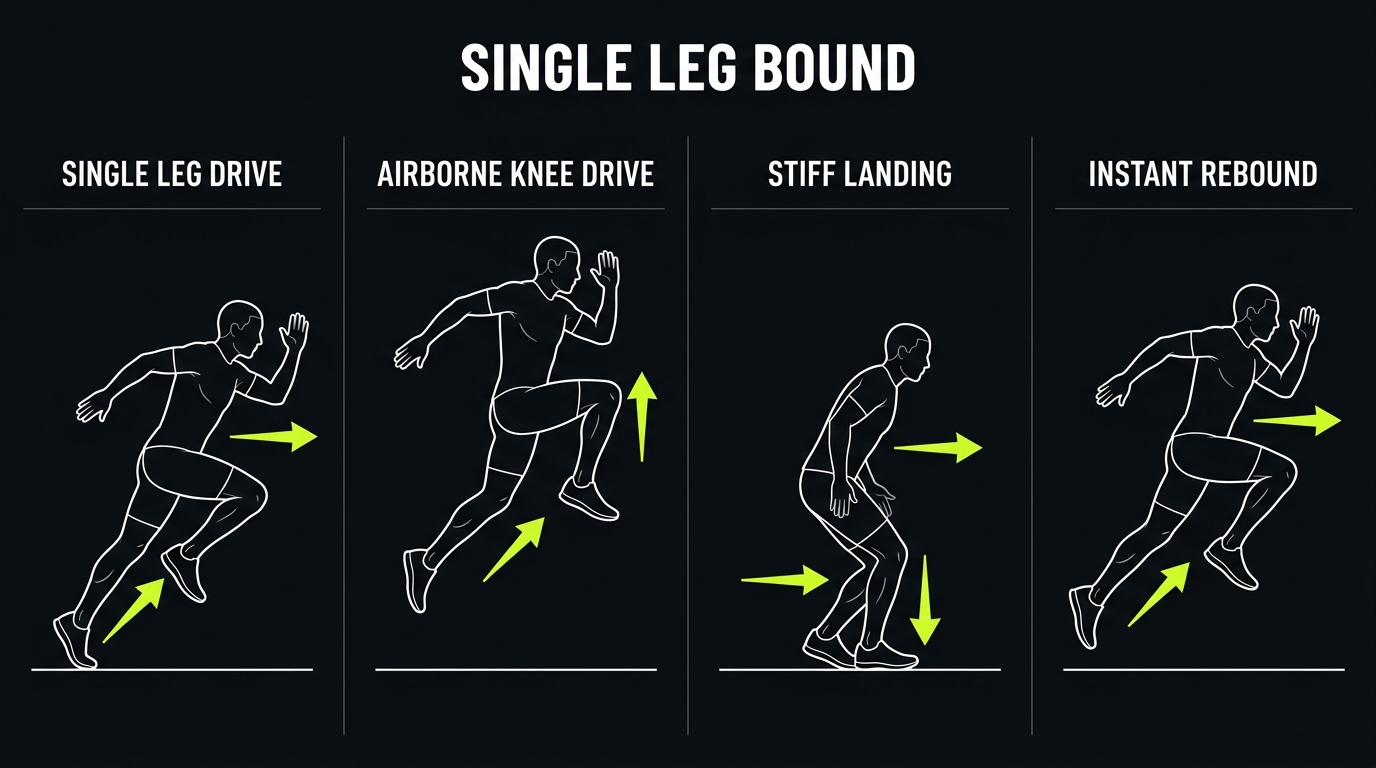
Take off on one leg, leap as far and high as possible, land on the same leg and immediately bound again. The most advanced lower-body plyometric — maximizes single-leg power and joint stiffness, transferring directly to single-leg takeoffs in basketball and volleyball.
Coaching cues
- 1.Drive the takeoff knee forward aggressively
- 2.Swing the opposite arm for rhythm
- 3.Muscles tense at landing — don't go soft
- 4.Start with 3-5 reps/set and progress
Detailed training method
Needs 6+ months of systematic strength base and a 2s single-leg landing hold without wobble; if left/right takeoff power differs >10%, train the weak side first; use two-leg versions if knee/ankle stability is insufficient
Related calculators
Related exercises
Box Jump
The first-choice entry to plyometrics — the box jump teaches fast force production and coordinated landing, a cornerstone of jump training
Depth Drop
The preparatory exercise for depth jumps — the depth drop teaches safe, efficient absorption of landing impact (eccentric strength), laying the safety foundation for explosive rebounds
Single-Leg Landing Control
The safety prerequisite for every single-leg jump — step off a low box or hop forward, land on one leg, and stick the landing for 2 seconds
Related articles
Approach Jump Technique: The Three Cues That Matter
Penultimate step, block step and takeoff — the three phases that turn horizontal speed into vertical height, with the common approach-jump mistakes that kill distance and how to fix them.
Single-Leg vs Double-Leg Jumps: Which Should You Train?
Two-leg jumps build symmetric force; one-leg jumps build horizontal-to-vertical conversion. Most athletes need both.
Standing Broad Jump: How to Measure It, Good Scores & Training
How to perform and measure the standing broad jump correctly, what counts as a good score, and how to use broad jumps to build horizontal power that carries into your vertical jump.