Conventional Deadlift
Pull the bar from the floor to full standing, then lower under control. The deadlift builds posterior-chain strength (glutes, hamstrings, back) — the key muscles for jump takeoff drive. A strong posterior chain means more ground reaction force. The conventional deadlift starts from a dead stop, training starting strength.
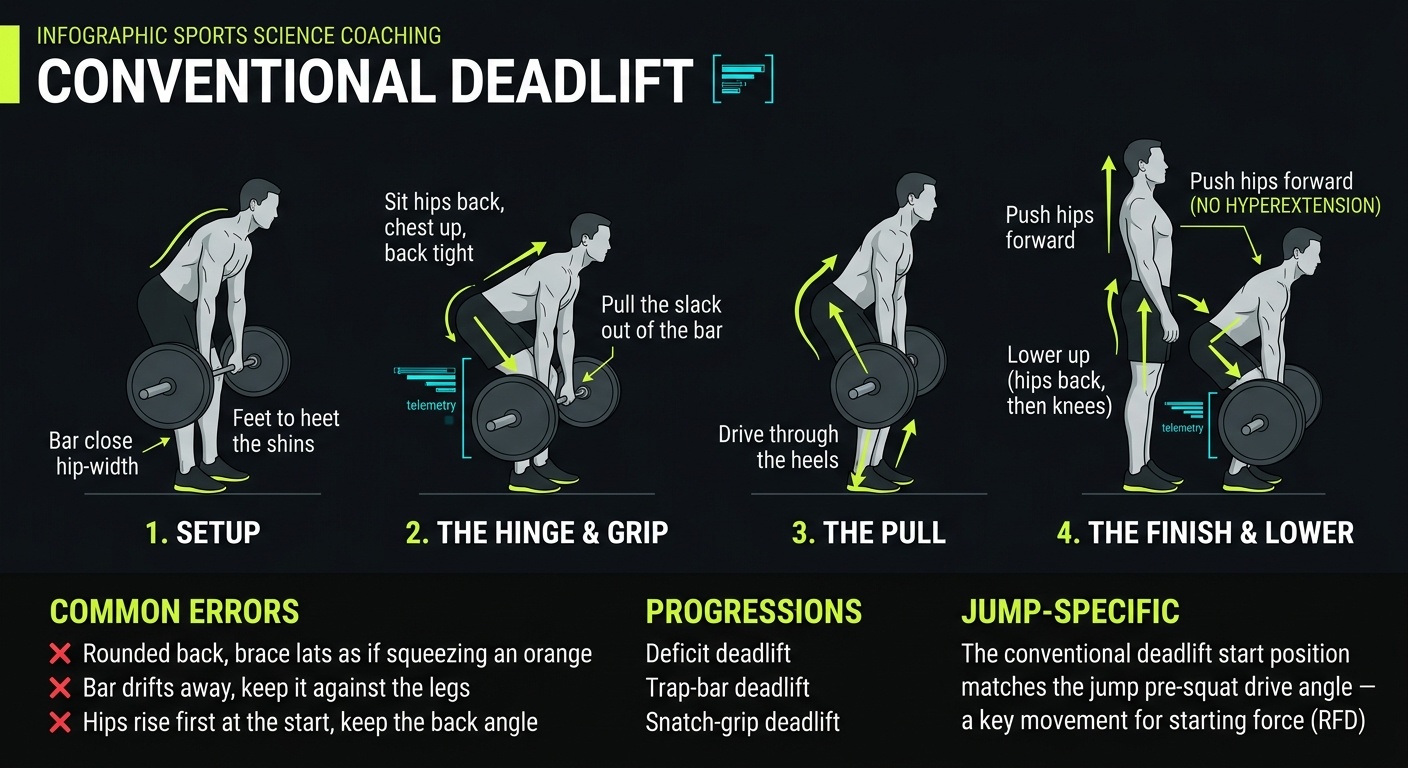
Coaching cues
- 1.Bar stays close to the shins — don't let it drift forward
- 2.Pull the slack out of the bar before driving
- 3.Back flat throughout — never round
- 4.At the top, push hips forward without hyperextending
Detailed training method
Athletes with lower-back issues can substitute trap-bar deadlifts
Related calculators
Related exercises
Goblet Squat
The best first squat for jumping — the goblet squat teaches the correct pattern (upright torso, braced core) as a foundation for barbell squats and jumping
Pause Squat
A back-squat variation with a 3-second hold at the bottom — the pause removes bounce and momentum, forcing controlled depth and strength from a dead stop
Barbell Back Squat
The king of strength training and an irreplaceable foundation movement for jump training